Global Fertility-Friendly Lubricant Market Strategic Research Report
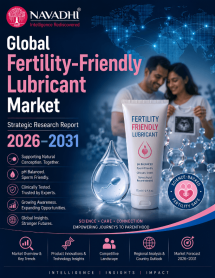
By Type: Water-Based Lubricants, HEC Gel Lubricants, Plant-Based Lubricants
By Application: At-Home Conception Use, IUI Procedure Support, IVF Adjunct Use
Regional Forecast: Asia Pacific, Latin America, MEA, Europe, North America
Key Players: Church &, Dwight Co., Inc. (Pre-Seed), Conceive Plus (Sasmar Pharmaceuticals), Fairhaven Health (BabyDance), Yes Yes Yes Ltd. (YES Baby), Natalist Inc., Theralogix LLC, Gynol Group (Fertile Safe), Procter &, Gamble (KY Brand Fertile-Safe Variants), Preseed International Ltd., Ovulation.com / Perinatal Partners LLC, INX Medical Ltd., Zymot Fertility Inc., Fairness Labs / FertilAid Brand
Übersicht
The fertility-friendly lubricant market occupies a structurally distinct position within the broader personal lubricant and reproductive health categories. Unlike conventional intimate lubricants, which can impair sperm motility or disrupt vaginal pH and osmolality, fertility-friendly formulations are engineered and clinically positioned to be compatible with conception -- spanning water-based, HEC gel, and plant-based product types used across at-home conception support, IUI procedure support, and IVF adjunct use.
Global revenue in the fertility-friendly lubricant market reached an estimated USD 117 Mn in 2024 and USD 128 Mn in 2025 (base year), a historical CAGR of approximately 9.3% over 2022-2024 (Navadhi Market Research Estimate). Growth is anchored in rising global infertility diagnoses, expanding consumer health literacy around sperm-safe formulation requirements, and accelerating direct-to-consumer retail penetration through fertility-focused e-commerce channels.
The market is projected to reach USD 223 Mn by 2031, expanding at a forecast CAGR of 9.7% over 2025-2031. North America commands the largest regional share at approximately 42% of 2025 revenue, driven by mature fertility-treatment infrastructure and high consumer willingness to pay for clinically-validated products, while Asia-Pacific is expected to deliver the fastest regional growth through the forecast period.
The competitive landscape remains moderately fragmented, led by Church & Dwight Co., Inc. (Pre-Seed), with Conceive Plus (Sasmar Pharmaceuticals), Fairhaven Health (BabyDance), Natalist Inc., and YES Yes Yes Ltd. (YES Baby) among the other leading commercial participants.
Market snapshot
Global Fertility-Friendly Lubricant Market Strategic Research Report snapshot, 2025–2031
 © MarketResearchReports.comDisclaimer: The actual data may vary in the final report which undergoes verification check post order confirmation.
Segments covered in this report
Table of contents
01Executive Summary
- Reproductive Wellness Moves Mainstream: A USD 128 Million Market Poised to Double by 2031
- Key Findings
- Leading Companies
- Regional Highlights
- Strategic Recommendations
02Market Overview and Global Forecast
- Historical & Forecast Market Size: 2022–2031
- CAGR Summary
- Market Structure: A Niche Transitioning to Mainstream Sexual Wellness
- Methodology and Estimation Framework
- Four Structural Catalysts Driving the 2025–2031 Forecast
03Market Segmentation by Product Type
- Segment Landscape: Three Distinct Formulation Philosophies Serve Divergent Consumer Needs
- Market Segmentation by Type — 2025 Snapshot
- Water-Based Lubricants — Scale Advantage Meets Margin Compression
- HEC Gel Lubricants — Clinical Validation Converts Premium Positioning into Market Share Gains
- Plant-Based Lubricants — Clean-Label Tailwind Positions the Smallest Segment for Fastest Growth
- Comparative Segment Dynamics: Share Rotation and Absolute Revenue Contribution
- Strategic Implications of Type Segmentation
04Market Segmentation by Application
- Application Channel Landscape: From Clinical Dominance to Consumer Democratization
- Application Segment Revenue Table: 2022–2031
- Clinical Channel: High Barriers, Sticky Relationships, but Structurally Bounded Growth
- DTC and Home Insemination: Premium Pricing Unlocks Margin Expansion
- OB-GYN Office and Hospital Outpatient: The Overlooked Recommendation Channel
05Regional Market Forecast
- North America
- Europe
- Asia-Pacific
- Middle East & Africa
- Latin America
06Country-Level Market Forecast
- Methodology Note on Country Allocation
- Summary Table: All Countries (2025E vs 2031F)
- North America (United States, Canada)
- Europe (Germany, United Kingdom, France, Italy, Spain)
- Asia-Pacific (China, India, Japan, South Korea, Australia)
- Latin America (Brazil, Mexico, Colombia)
- Middle East & Africa (Saudi Arabia, UAE, South Africa)
07Market Drivers, Restraints, and Opportunities
- Growth Drivers
- Market Inhibitors / Challenges
- Net Assessment: Structural Demand Tailwinds Outweigh Cyclical and Competitive Headwinds
08Company Profiles
- 8.1 Church & Dwight Co., Inc. (Pre-Seed)
- 8.1.1 Company Overview
- 8.1.2 Key Products & Segments
- 8.1.3 Financial Performance (2023–2025)
- 8.1.4 Business Strategy
- 8.1.5 Product Strategy
- 8.1.6 SWOT Analysis
- 8.1.7 Strategic Implications (2025–2031)
- 8.2 Fairhaven Health (BabyDance)
- 8.2.1 Company Overview
- 8.2.2 Key Products & Segments
- 8.2.3 Financial Performance (2023–2025)
- 8.2.4 Business Strategy
- 8.2.5 Product Strategy
- 8.2.6 SWOT Analysis
- 8.2.7 Strategic Implications (2025–2031)
- 8.3 Preseed International Ltd.
- 8.3.1 Company Overview
- 8.3.2 Key Products & Segments
- 8.3.3 Financial Performance (2023–2025)
- 8.3.4 Business Strategy
- 8.3.5 Product Strategy
- 8.3.6 SWOT Analysis
- 8.3.7 Strategic Implications (2025–2031)
- 8.4 Natalist Inc.
- 8.4.1 Company Overview
- 8.4.2 Key Products & Segments
- 8.4.3 Financial Performance (2023–2025)
- 8.4.4 Business Strategy
- 8.4.5 Product Strategy
- 8.4.6 SWOT Analysis
- 8.4.7 Strategic Implications (2025–2031)
- 8.5 Yes Yes Yes Ltd. (YES Baby)
- 8.5.1 Company Overview
- 8.5.2 Key Products & Segments
- 8.5.3 Financial Performance (2023–2025)
- 8.5.4 Business Strategy
- 8.5.5 Product Strategy
- 8.5.6 SWOT Analysis
- 8.5.7 Strategic Implications (2025–2031)
- 8.6 Conceive Plus (Sasmar Pharmaceuticals)
- 8.6.1 Company Overview
- 8.6.2 Key Products & Segments
- 8.6.3 Financial Performance (2023–2025)
- 8.6.4 Business Strategy
- 8.6.5 Product Strategy
- 8.6.6 SWOT Analysis
- 8.6.7 Strategic Implications (2025–2031)
- 8.7 Theralogix LLC
- 8.7.1 Company Overview
- 8.7.2 Key Products & Segments
- 8.7.3 Financial Performance (2023–2025)
- 8.7.4 Business Strategy
- 8.7.5 Product Strategy
- 8.7.6 SWOT Analysis
- 8.7.7 Strategic Implications (2025–2031)
- 8.8 Procter & Gamble (KY Brand Fertile-Safe Variants)
- 8.8.1 Company Overview
- 8.8.2 Key Products & Segments
- 8.8.3 Financial Performance (2023–2025)
- 8.8.4 Business Strategy
- 8.8.5 Product Strategy
- 8.8.6 SWOT Analysis
- 8.8.7 Strategic Implications (2025–2031)
- 8.9 Gynol Group (Fertile Safe)
- 8.9.1 Company Overview
- 8.9.2 Key Products & Segments
- 8.9.3 Financial Performance (2023–2025)
- 8.9.4 Business Strategy
- 8.9.5 Product Strategy
- 8.9.6 SWOT Analysis
- 8.9.7 Strategic Implications (2025–2031)
- 8.10 Ovulation.com / Perinatal Partners LLC
- 8.10.1 Company Overview
- 8.10.2 Key Products & Segments
- 8.10.3 Financial Performance (2023–2025)
- 8.10.4 Business Strategy
- 8.10.5 Product Strategy
- 8.10.6 SWOT Analysis
- 8.10.7 Strategic Implications (2025–2031)
- 8.11 Zymot Fertility Inc.
- 8.11.1 Company Overview
- 8.11.2 Key Products & Segments
- 8.11.3 Financial Performance (2023–2025)
- 8.11.4 Business Strategy
- 8.11.5 Product Strategy
- 8.11.6 SWOT Analysis
- 8.11.7 Strategic Implications (2025–2031)
- 8.12 Fairness Labs / FertilAid Brand
- 8.12.1 Company Overview
- 8.12.2 Key Products & Segments
- 8.12.3 Financial Performance (2023–2025)
- 8.12.4 Business Strategy
- 8.12.5 Product Strategy
- 8.12.6 SWOT Analysis
- 8.12.7 Strategic Implications (2025–2031)
- 8.13 INX Medical Ltd.
- 8.13.1 Company Overview
- 8.13.2 Key Products & Segments
- 8.13.3 Financial Performance (2023–2025)
- 8.13.4 Business Strategy
- 8.13.5 Product Strategy
- 8.13.6 SWOT Analysis
- 8.13.7 Strategic Implications (2025–2031)
09Competitive Landscape
- Market Share Landscape: Estimated Revenue and Positioning, 2025
- Competitive Summary Scorecard
- Competitive Dynamics: Incumbents Under Structural Pressure from DTC Challengers
- M&A Activity and Strategic Transactions Summary, 2022–2025
- Technology Differentiation Matrix
10Porter's Five Forces Analysis
- Threat of New Entrants
- Supplier Power
- Buyer Power
- Threat of Substitutes
- Competitive Rivalry
- Industry Attractiveness Assessment
11PESTLE Analysis
- Political Forces: Pronatalist Policy Tailwinds Offset by Reproductive Rights Fragmentation
- Economic Forces: Premiumization and Fertility Benefit Adoption Drive Revenue Intensity
- Social Forces: Demographic Shifts and Destigmatization Create Durable Demand Architecture
- Technological Forces: Formulation Science and Digital Integration Accelerate Product Differentiation
- Legal Forces: Dual Classification Regimes Create Moats and Compliance Burdens Simultaneously
- Environmental Forces: Packaging Regulation and Sustainability Premiums Converge by 2028
- PESTLE Impact Summary
12SWOT Analysis
- SWOT Matrix: Internal Factors (Strengths, Weaknesses)
- SWOT Matrix: External Factors (Opportunities, Threats)
- Strategic Implications: Converting SWOT Positions into Competitive Action
- Priority Actions for Market Participants: 2025–2031 Execution Roadmap
13Future Trends and Strategic Outlook
- Trend 1: Clinical Validation Requirements Transition from Differentiator to Market-Entry Threshold
- Trend 2: The IVF/ART Boom Converts a Consumer Product into a Clinical Consumable
- Trend 3: Plant-Based and Bioidentical Formulations Capture Premiumization Upside
- Trend 4: HEC Gel Formulation Science Unlocks New Osmolality-Optimized Performance Claims
- Trend 5: Digital Fertility Ecosystems Create Bundled Distribution Leverage
- Trend 6: Male Fertility Awareness Drives Category Expansion Beyond the Female Consumer
- Trend 7: Emerging Market Formalization Creates a USD 25–35 Mn Greenfield Opportunity by 2031
- Trend 8: Sustainability Mandates Reshape Packaging Architecture Across the Value Chain
- Forward Outlook: Converging Forces Produce a Structurally Different Market by 2031
Frequently asked questions
What is the size of the fertility-friendly lubricant market?
What is the CAGR of the fertility-friendly lubricant market?
What is driving growth in the fertility-friendly lubricant market?
Who are the leading companies in the fertility-friendly lubricant market?
Which region dominates the fertility-friendly lubricant market?
What segments are covered in this report?
What is the forecast period covered in this report?
Research Methodology
All MarketResearchReports.com strategic research reports follow a rigorous, multi-stage methodology combining AI-assisted data synthesis with expert analyst validation.
Systematic collection from 500+ verified sources including SEC filings, industry databases (Bloomberg, Statista, OECD), regulatory filings, trade publications, patent databases, and company annual reports. AI-assisted extraction identifies relevant data points across 10,000+ documents per report.
Dual-validation approach: bottom-up sizing aggregates segment-level production, consumption, and trade data; top-down sizing cross-validates against macroeconomic indicators and total addressable market estimates. Discrepancies >5% trigger analyst review.
Company profiles built from public financial disclosures, product launches, M&A activity, job postings (as capability proxies), and supply chain mapping. Market share estimates triangulated across revenue, capacity, and shipment data.
CAGR projections use time-series regression on 5-10 years of historical data, adjusted for identified demand drivers (technology adoption curves, regulatory catalysts, demographic shifts) and demand inhibitors (cost barriers, substitution risk). Scenario modeling covers base, optimistic, and conservative cases.
All quantitative outputs reviewed by a domain-specialist analyst before publication. Data triangulation requires minimum 3 independent sources for every key figure. Reports undergo a structured peer review against our 47-point quality checklist covering methodology, data citations, logical consistency, and formatting standards.
On-demand reports are generated at time of purchase, incorporating the most recent available data. Static reports are republished when underlying market conditions shift by >10% from baseline assumptions. Purchasers receive update notifications for 12 months.
Related reports
 Navadhi Market Research · Healthcare & Medical Devices
Global Wireless Infusion Pump Safety Market Strategic Research Report
The global wireless infusion pump safety market occupies a critical intersection of medical device technology, patient safety infrastructure, and hospital informatio…
Navadhi Market Research · Healthcare & Medical DevicesGlobal Smart Medical Waste Segregation Market Strategic Research Report
The global smart medical waste segregation market occupies a critical intersection of healthcare infrastructure, environmental compliance, and industrial automation.…
Navadhi Market Research · Healthcare & Medical DevicesGlobal Microfluidic Point of Care Diagnostics Market Strategic Research Report
The global microfluidic point of care (POC) diagnostics market represents one of the most commercially consequential intersections of materials science, biomedical e…
Need a customized version?
Get country-, segment- or company-specific intelligence tailored to your exact requirements.
Request custom research →Request a free sample
Receive a sample of Global Fertility-Friendly Lubricant Market Strategic Research Report before you buy.
Customize This Report
Describe your specific requirements and our analysts will scope and deliver a tailored version.
Request Invoice
We will email a proforma invoice within 24 hours. Report access is granted upon payment confirmation.
Leading Brands in This Industry