

Indian Defense Market Expenditure Prediction for 2014
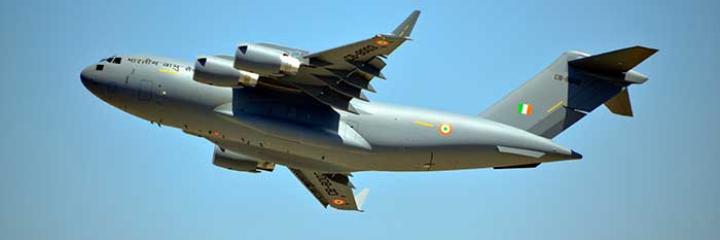
The Indian defense technology has seen a vast improvement in the last couple of decades, especially in the last year where the technological marvels touched a new height.
The Indian defense market offers numerous market opportunities to both domestic and foreign manufacturers as one of the largest defense equipment markets in the world, India is expected to spend $119.3 billion on capital acquisition. Starting 2012 for two more years, India is expected to spend a significant amount of money on homeland security, intelligence, and cyber security, primarily due to an increasingly hazardous geopolitical environment, the threat of terrorism, neighboring nations' disputes, and internal security concerns. Some more factors that are likely to influence the future growth course of the defense sector in India are:
- On January 1st 2014, India has cancelled the $753m Finmeccanica helicopter deal with British manufacturer AgustaWestland over allegations that it was riddled with kickbacks.
- India will purchase 15 unmanned aerial vehicles (UAVs) from Israel under $2m deal.
- Japan and India have agreed to discuss a deal for the ShinMaywa US-2 amphibian.
- Further development of the defense equipments, weapons and defense systems procurement process,
- The formation and implementation of a defense industrialization strategy, mainly to coordinate the use of offsets and new technology,
- Transfer of technology and resources to appropriate areas and fields most necessary, and
- FDI and revisions to the taxation regime, and lastly but importantly incentives that allow encouragement.
An important design consideration for wearable technologies is understanding how to deliver as much information as possible to users before they transition their attention to another device. Wearable technologies ability to capture users' attention, provide immediate visual notifications, and stimulate a response from the wearer requires a different approach than text-heavy communications. The physical constraints of devices such as smartwatches that offer brands an opportunity to use a rich visual language to quickly communicate to users ideas that would otherwise require scrolling through lots of text.
It was in Aero Show in Bangalore that seeing the necessity and innovation, and current defense systems and technology situation that the Finance Minister hiked the defense allocation by 5.3% $ 37.4 billion and made the customary promise that, there will be no constraints in the way of providing any additional requirement for the security of the nation. As much well intentioned and promising it sound yet for many it is still a skeptical feeling before believing blindly, especially for the one at the border, the systems need a lot of improvement and technology needs a lot of scales higher development. This nominal increase in the latest defense allocation, which is quite modest in comparison to the growth rates of 17.6% and 11.6% in the previous two budgets, and it has been caused by a depressing economic environment and the government’s austerity drive to combat the fiscal deficit; however, the defense ministry, which is already battling a high inflationary regime and an adverse rupee-dollar exchange rate, for which there is literally no stability or a quality of assurance, may find the new allocation inadequate to sustain both the running and modernization requirements of the armed forces.
Lately, though, the Indian defense market has offered numerous market opportunities to both domestic and foreign manufacturers. As one of the largest defense equipment markets in the world, India is expected to spend $119.3 billion on capital acquisition alone during the forecast period. It is a matter of time when the fast changing security environment is multiplying security threats and incidents that have given a better push too, the capabilities of India's armed forces are not being upgraded but there are major hopes. Biggest alarming factor is the fact that the increase in allocation for crucial capital acquisition comes to only approximately 5%, when seen in the backdrop of 7% annual inflation and adjustment against rupee value.
The security environment not only continues to be difficult, it is becoming worse. Our land borders with China and Pakistan demand continuous active deployment of forces. The coastal region and security of sea-lanes as also of crucial EEZs require a naval force equipped with best weapon system and speed boats. Our only aircraft carrier INS Viraat needs urgent up gradation and is out of action for several months for a major refit so that it may again become operational. The other one INS Vikramaditya (Admiral Gorshokov) is available by the end of the 2013, and the indigenous 40000 tonne aircraft carrier are expected to be available by 2018 if it continues to get the required funds. The nuclearized South Asia underlines the need for not only best fighter planes but different kinds of missiles, something that the standards of European and American have reached, and surprisingly the middle east and Korean military too.
The centrality of air dominance cannot be underestimated and that demands adequate number of state of art stealth fighters. This is particularly important when China is in the process of deploying three different types of stealth aircraft-J-15, J-20 and J-31. It has already developed a number of armed UAVs. The widening gap with China is so much so that just days after India announced its $37.4 billion defense budget, China announced an 11% hike in its 2013 defense budget which now stands a staggering total of $115.7 billion; and it is second largest military budget after the US’, and to many outside observers, China’s actual defense spending is much more than the official estimated figure. The Indian army requires modern artillery guns, ant-tank missiles and tanks that can prove superior to others in terms of mobility, fire power and radius of operation. All these require sufficient funds. In the last five years since 2008-09, the budget allocation has been revised three times in 2008-09, 2010-11 and 2011-12, and it has happened irrespective of the pace and secure stage of economic growth. The positive outcome would be when there is a hope that the economy picks up and more funds are available for the army to buy more advanced tech as the year progresses and also in the coming years which need to be carefully looked at and planned.
Related Reports