


World's Top 10 LPG Alternatives Companies
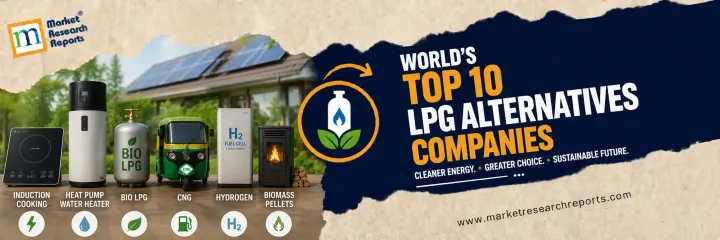
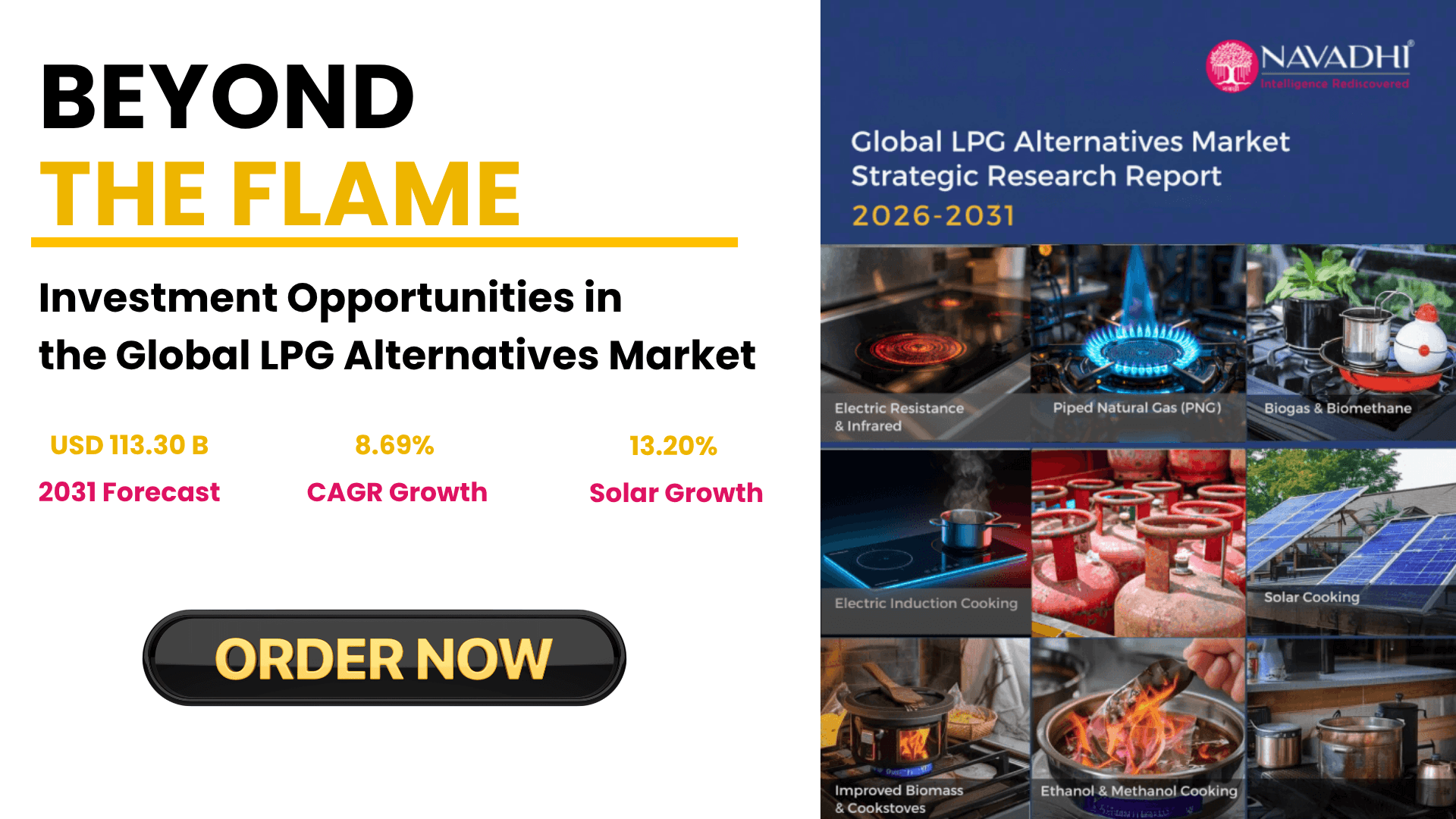
The global LPG alternatives market is undergoing one of the most accelerated structural transitions in the history of energy access. Valued at USD 68.5 billion in 2025, the market is projected to reach USD 111.6–113.3 billion by 2031 at a CAGR of 8.50–8.69%, according to the NAVADHI Global LPG Alternatives Market Strategic Research Report 2026–2031. This growth is being driven simultaneously by four structural forces: the ongoing Iran War-triggered LPG supply disruption, secular decarbonisation policy mandates across the G20, rapid cost reduction in electric cooking appliances, and mounting evidence that LPG alternatives are now economically superior in major markets.
The Iran War is the single most significant near-term accelerant. The Strait of Hormuz — through which approximately 35% of globally traded LPG transits — has been effectively blocked since February 28, 2026, causing LPG prices to surge 22–35%. This supply shock has compressed adoption timelines for every LPG alternative by an estimated 2–3 years, transforming what were medium-term transitions into immediate procurement decisions by governments, commercial kitchen operators, and households across Asia, Africa, and the Middle East.
The competitive landscape in this market is deliberately diverse: no single company spans all seven LPG alternative categories (electric induction, piped natural gas, biogas/biomethane, improved biomass cookstoves, solar cooking, ethanol/methanol cooking, and electric resistance/infrared). The ten companies profiled in this report represent the leading players across the most commercially significant alternative categories, from Midea Group's global scale in electric induction cooking to GoSun's pioneering work in solar cooking for off-grid populations.
Solar cooking, while the smallest segment today, is expected to show the highest growth at a CAGR of 13.32% through 2031, driven by declining costs in parabolic and box cooker technology and rapid adoption in Sub-Saharan Africa and South Asia. Electric induction cooking leads the market in absolute size with a 10.90% CAGR, while biogas and biomethane follow at 11.46% — both benefiting from EU mandates, India's GOBAR-DHAN scheme, and the global food waste regulation wave.
Top 10 at a Glance
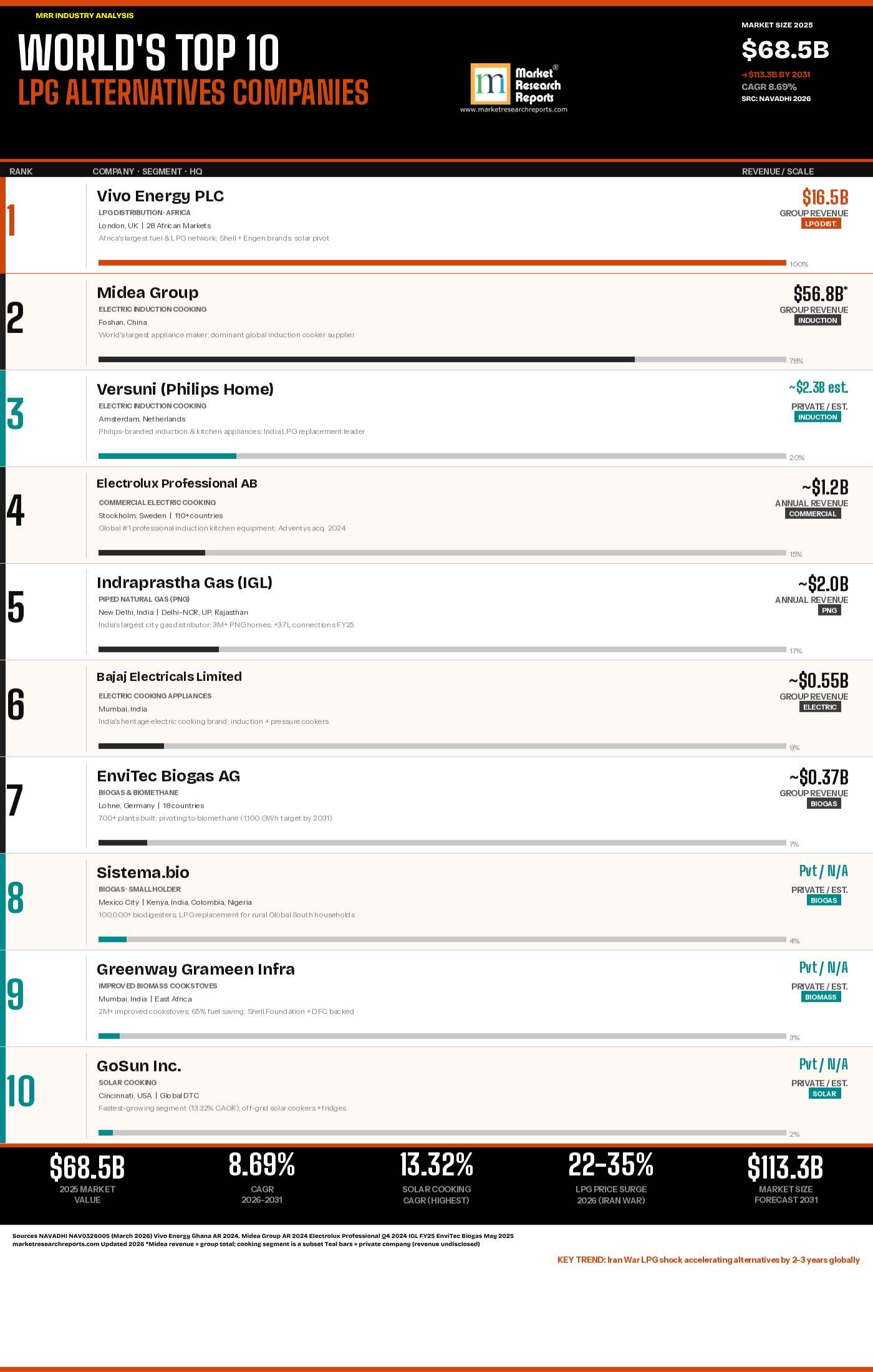
Rank | Company | HQ | Segment | Est. Revenue |
|---|---|---|---|---|
| 1 | Vivo Energy PLC | London, UK | LPG Distribution (Africa) | ~$16.5B (2024, group) |
| 2 | Midea Group (Cooking) | Foshan, China | Electric Induction Cooking | ~$56.8B (2024, group) |
| 3 | Versuni (Philips Home Appliances) | Amsterdam, Netherlands | Electric Induction Cooking | ~$2.3B (est., pvt) |
| 4 | Electrolux Professional AB | Stockholm, Sweden | Commercial Cooking Equipment | ~$1.2B (SEK 12.5B, 2024) |
| 5 | Indraprastha Gas Limited (IGL) | New Delhi, India | Piped Natural Gas (PNG) | ~$2.0B (INR 16,800Cr, FY25) |
| 6 | Bajaj Electricals Limited | Mumbai, India | Electric Cooking Appliances | ~$0.55B (FY25, verified) |
| 7 | EnviTec Biogas AG | Lohne, Germany | Biogas & Biomethane | ~$0.37B (EUR 337.7M, 2024) |
| 8 | Sistema.bio (Sistema Biobolsa) | Mexico City, Mexico | Biogas (Smallholder) | Est. (pvt, undisclosed) |
| 9 | Greenway Grameen Infra Pvt. Ltd. | Mumbai, India | Improved Biomass Cookstoves | Est. (pvt, undisclosed) |
| 10 | GoSun Inc. | Cincinnati, USA | Solar Cooking | Est. (pvt, undisclosed) |
* Note: This list ranks companies by segment leadership, market reach, and strategic importance in the global LPG alternatives transition — not purely by revenue. Revenue figures shown are group/company-wide unless noted as segment-specific. Private company revenues (Versuni, Sistema.bio, Greenway, GoSun) are estimates or undisclosed. LPG alternative segment revenues are a subset of group figures for Midea and Vivo Energy. All figures in USD; non-USD converted at approximate 2024–2025 FX rates.
Global Market Statistics
- Global LPG alternatives market value (2025): USD 68.5 billion
- Projected market value by 2031: USD 111.6–113.3 billion
- Market CAGR (2026–2031): 8.50–8.69% (source: NAVADHI, 2026)
- Fastest-growing segment: Solar Cooking (13.32% CAGR, 2026–2031)
- Largest segment: Electric Induction Cooking (10.90% CAGR, 2026–2031)
- Biogas & Biomethane segment CAGR: 11.46% (EU mandates + India GOBAR-DHAN)
- Piped Natural Gas (PNG) segment CAGR: 5.92% (urban infrastructure expansion)
- Iran War impact: LPG prices surged 22–35% since Feb 28, 2026; Hormuz Strait disruption
- Adoption timelines accelerated by estimated 2–3 years due to LPG price shock
- Improved Biomass & Cookstoves CAGR: 3.90% (mature market, rural electrification limiting upside)
- Ethanol & Methanol Cooking CAGR: 8.45% (Africa clean cooking + cellulosic cost reduction)
- Key markets with Critical LPG Dependency: India, Indonesia, Bangladesh, Philippines, Thailand
Company Profiles
1. Vivo Energy PLC
Vivo Energy PLC, headquartered in London and now fully owned by Vitol Group (acquired July 2022), is Africa's largest pan-continental distributor and retailer of fuels, lubricants, and — increasingly — LPG. Operating across 28 African markets with approximately 4,000 service stations, Vivo distributes Shell and Engen-branded products to retail, commercial, aviation, and industrial customers. The company's LPG distribution segment makes it directly relevant to the LPG alternatives transition: Vivo is simultaneously one of the continent's largest LPG distributors and an active investor in LPG alternative infrastructure, particularly solar energy and clean cooking solutions, as part of its 'Evolving our Business Model' strategy pillar.
Vivo Energy reported group revenues of approximately USD 16.5 billion in 2024, verified through GlobalData and cross-referenced by Kenya market disclosures showing the group's total revenue of USD 16.47 billion. This makes Vivo the largest company in this ranking by total revenue, though the majority of its revenues derive from conventional fuels rather than LPG alternatives. In October 2023, Vivo acquired Somagaz, an Indian Ocean LPG distribution company — reflecting an active expansion in LPG and alternative cooking fuels for African consumers. The company's strategic roadmap explicitly includes solar energy and new mobility under its 'Evolving our Business Model' pillar.
- HQ: London, United Kingdom (operations in 28 African markets)
- 2024 Revenue: ~USD 16.5B (group, verified, GlobalData / Kenya market disclosure)
- Key Products/Services: Retail fuel, commercial fuels, LPG cylinders, lubricants, solar energy
- Segments: Retail Fuel, Commercial, LPG, Non-Fuel Retail, Solar / New Mobility
- 2026 Update: Vitol-owned; Somagaz LPG acquisition (2023); solar and clean cooking expansion across Africa
2. Midea Group (Cooking Appliances)
Midea Group, headquartered in Foshan, China, is the world's largest home appliances manufacturer by revenue and the dominant global player in electric induction cooking — the fastest-growing and largest-by-revenue segment of the LPG alternatives market. Listed on the Shenzhen Stock Exchange, Midea's product range spans air conditioners, refrigerators, washing machines, and a comprehensive cooking appliance line that includes induction cookers, microwave ovens, rice cookers, and electric pressure cookers. Its cooking appliance division alone is estimated to serve hundreds of millions of households globally, with particular dominance in China, Southeast Asia, the Middle East, and emerging markets transitioning away from LPG.
Midea Group reported group revenues of RMB 409,084 million (approximately USD 56.8 billion) for 2024, up 9.5% year-on-year, with profit for the year rising 14.9% to RMB 38,759 million. While the cooking appliance segment is a fraction of group revenue, Midea's global distribution footprint, manufacturing scale, and aggressive pricing strategy make it the single most influential company driving LPG-to-electric-induction transitions worldwide. In 2024–2025, Midea accelerated its international expansion under the 'TOSHIBA' and 'Carrier' branded appliance portfolios while advancing AI-integrated smart cooking platforms.
- HQ: Foshan, Guangdong, China
- 2024 Revenue: ~USD 56.8B (RMB 409,084M, +9.5% YoY; group total)
- Key Products: Induction cookers, microwave ovens, electric pressure cookers, smart kitchen appliances
- Segments: HVAC, Consumer Appliances (incl. cooking), Robotics & Automation, Building Technologies
- 2026 Update: AI-powered smart cooking platform launch; major international induction cooker volume growth
3. Versuni (Philips Home Appliances)
Versuni, formerly Philips Domestic Appliances, operates as an independent company following its carve-out from Philips N.V. and subsequent acquisition by private equity firm Hillhouse Capital in 2021. Headquartered in Amsterdam and licensed to use the Philips brand across its home appliance portfolio, Versuni manufactures and markets induction cookers, air fryers, blenders, coffee machines, and kitchen appliances under the Philips, Preethi, Saeco, and Gaggia brands. Its induction cooking portfolio — including the Philips series of portable and built-in induction hobs — is directly positioned as an LPG replacement for urban and semi-urban households across Asia, Europe, and the Middle East.
Versuni India Home Solutions Limited, the Indian subsidiary and the most extensively reported entity, reported revenues of approximately INR 1,890–1,893 crore (approximately USD 227 million) for FY2025, reflecting 8% year-on-year growth driven by strong domestic demand for Philips and Preethi branded kitchen appliances. Global group revenue is estimated at approximately USD 2–2.5 billion, though Versuni remains private and does not publish consolidated global accounts. Versuni's strength in India — where induction cooking is rapidly replacing LPG due to the ongoing LPG price shock — makes it a strategically critical player in the single largest LPG-dependent market globally.
- HQ: Amsterdam, Netherlands (global); operations in 100+ countries
- Revenue: ~USD 2–2.5B est. (group, private); India subsidiary INR 1,890Cr (~USD 227M) FY2025
- Key Products: Induction cookers, air fryers, blenders, Preethi mixer-grinders, coffee machines
- Segments: Cooking, Coffee, Personal Care, Home Care, Kitchen Appliances
- 2026 Update: India induction cooker demand surging on LPG price shock; Preethi brand dominant in S. India
4. Electrolux Professional AB
Electrolux Professional AB, listed on Nasdaq Stockholm and headquartered in Stockholm, is the global leader in professional foodservice equipment for commercial kitchens — including induction cooking, electric ovens, combi-steamers, dishwashers, and laundry systems for hotels, restaurants, healthcare, and education facilities. Separated from the Electrolux consumer group in March 2020 as an independent publicly listed company, Electrolux Professional serves customers in over 110 countries through its Electrolux Professional, Zanussi Professional, and Adventys brands. Its commercial induction cooking equipment is positioned as the premium alternative to gas-fired professional kitchen equipment, benefiting directly from the global commercial food service transition away from LPG and natural gas.
Electrolux Professional Group reported global sales of SEK 12.5 billion (approximately USD 1.2 billion) for 2024, with Q4 2024 organic growth of 3.3% and total growth of 11.9% (7.6% from acquisitions, notably TOSEI and Adventys both acquired in 2024). The company's Food & Beverage segment, which includes all professional cooking equipment, drives the majority of revenue. In 2024–2025, Electrolux Professional advanced its strategy of focusing sales on high-margin induction and electric cooking products while phasing out lower-margin categories. The acquisition of Adventys — a specialist in induction cooking for professional kitchens — specifically strengthens its LPG alternative positioning.
- HQ: Stockholm, Sweden (listed: Nasdaq Stockholm)
- 2024 Revenue: ~USD 1.2B (SEK 12.5B, verified; Electrolux Professional Group annual disclosure)
- Key Products: Professional induction cookers, combi-steamers, electric ovens, dishwashers, laundry systems
- Segments: Food & Beverage, Laundry; brands: Electrolux Professional, Zanussi, Adventys
- 2026 Update: Adventys (induction specialist) acquired 2024; phasing out low-margin gas-cooking product lines
5. Indraprastha Gas Limited (IGL)
Indraprastha Gas Limited (IGL), incorporated in 1998 as a joint venture between GAIL India and Bharat Petroleum Corporation (BPCL), is India's largest city gas distribution (CGD) company and the country's leading provider of Piped Natural Gas (PNG) to residential and commercial customers. Headquartered in New Delhi, IGL operates an extensive pipeline network across Delhi-NCR, Uttar Pradesh, and Rajasthan, supplying PNG directly to kitchens as a cleaner, safer, and now — given LPG price surges — more cost-competitive alternative to LPG cylinders. IGL also supplies Compressed Natural Gas (CNG) to over 1.5 million vehicles across the Delhi-NCR region.
IGL reported a gross turnover of INR 16,400 crore (approximately USD 1.97 billion) for FY2025, with profit after tax of INR 1,468 crore — solid performance despite EBITDA compression from gas procurement cost increases. The company expanded its PNG domestic connection base by 3.7 lakh (370,000) connections in FY2025, taking total domestic PNG connections to over 3 million. The PNG volumes for Q4 FY2025 stood at 222.69 million standard cubic meters (mscm). IGL's expansion into newer districts across UP and Rajasthan under the national CGD licensing framework makes it a central player in India's LPG-to-PNG transition — particularly relevant given that India is classified as a Critical LPG Dependency market in the NAVADHI report.
- HQ: New Delhi, India (listed: NSE/BSE)
- FY2025 Revenue: ~USD 1.97B (INR 16,400 Cr gross turnover; INR 16,800 Cr per Tracxn); PAT INR 1,468 Cr
- Key Products/Services: Piped Natural Gas (PNG) residential/commercial, CNG vehicular fuel, biogas
- Segments: CNG (vehicular), PNG (domestic, commercial, industrial)
- 2026 Update: 3.7 lakh PNG connections added FY25; 3M+ total domestic connections; UP and Rajasthan expansion
6. Bajaj Electricals Limited
Bajaj Electricals Limited, headquartered in Mumbai and part of the Bajaj Group conglomerate, is one of India's most established electrical consumer goods and professional lighting companies, with a significant presence in electric cooking appliances — induction cookers, mixer-grinders, electric pressure cookers, and microwave ovens. Founded in 1938, Bajaj Electricals has over 8 decades of brand heritage and distributes through a network of over 600 authorised service centres and thousands of retail points across India. Its electric cooking appliance portfolio directly competes in the LPG alternatives market for Indian households choosing to switch from cylinder-dependent gas cooking to electric alternatives.
Bajaj Electricals reported revenues of approximately USD 0.55 billion (INR ~4,727 crore) for the trailing twelve months as of September 2025, broadly flat versus FY2024. The company has been navigating a challenging period of profitability compression — EBITDA declined approximately 27% in FY2024 — driven by increased competition from Chinese and Korean appliance brands and the loss of its EPC (Engineering, Procurement & Construction) business segment. Despite revenue pressures, Bajaj Electricals remains one of the top 2–3 players in electric kitchen appliances and a top-5 player in fans and lighting in India, with strong brand recall and an extensive distribution network that serves both urban and semi-urban markets transitioning from LPG.
- HQ: Mumbai, Maharashtra, India (listed: NSE/BSE)
- Revenue: ~USD 0.55B (INR ~4,727 Cr TTM to Sep 2025; verified, Screener/PitchBook)
- Key Products: Induction cookers, electric pressure cookers, mixer-grinders, fans, LED lighting
- Segments: Consumer Products (cooking, fans, appliances), Professional Lighting
- 2026 Update: Focus on profitability recovery; electric cooking growing as LPG prices surge; EPC exit completed
7. EnviTec Biogas AG
EnviTec Biogas AG, headquartered in Lohne, Germany, is one of Europe's largest biogas and biomethane plant constructors and operators, with a presence in 18 countries. Founded in 2002, EnviTec designs, constructs, and operates biogas plants that convert agricultural residues, food waste, and energy crops into biogas and biomethane — the cleanest and most direct LPG substitute in the biogas/biomethane segment. The company has constructed over 700 biogas and gas upgrading plants globally, serving both the European renewable energy market (under Feed-In Tariff and renewable energy mandates) and the growing global biomethane export market. EnviTec is publicly listed on XETRA (Frankfurt Stock Exchange).
EnviTec Biogas AG generated revenues of EUR 337.7 million (approximately USD 365 million) in 2024, with EBT of EUR 44.0 million. This represented a normalization from record revenues of EUR 416.8 million in 2023 — a decline driven by lower plant construction activity following a record order intake year. The company is executing a strategic pivot from electricity-focused biogas production to biomethane production: by 2031, EnviTec plans to produce 1,100 GWh of biomethane (vs. 500 GWh in 2025), reflecting the higher value and policy alignment of biomethane under EU decarbonisation mandates. In 2025, revenues declined further to approximately EUR 296.8 million (H1 2025 annualised), reflecting weaker Plant Construction segment performance.
- HQ: Lohne, Germany (listed: XETRA Frankfurt)
- 2024 Revenue: ~USD 0.37B (EUR 337.7M; verified, company press release May 2025)
- Key Products/Services: Biogas plant construction, biomethane upgrading, own plant operation, O&M services
- Segments: Plant Construction, Own Plant Operation (electricity + biomethane), Service
- 2026 Update: Strategic pivot to biomethane (target: 1,100 GWh by 2031); 700+ plants across 18 countries
8. Sistema.bio (Sistema Biobolsa)
Sistema.bio (formerly Sistema Biobolsa), headquartered in Mexico City with operations spanning Mexico, Kenya, India, Colombia, Nigeria, and other markets, is the world's leading provider of small-scale biogas digesters for smallholder farmers and rural communities in the Global South. Founded in 2010, Sistema.bio designs and installs low-cost flexible polyethylene biodigesters that convert livestock manure and organic waste into biogas for cooking and bio-fertiliser (bioslurry) for agriculture. Its flagship product — a fixed-dome flexible biodigester available in 3 to 10 cubic metre sizes — is explicitly designed to replace LPG, firewood, and charcoal in rural households that lack grid electricity and piped gas access.
Sistema.bio is a private company and does not publish audited financial statements. However, its scale is significant: as of 2025, the company has installed over 100,000 biodigesters across multiple countries, directly displacing LPG consumption for rural cooking in some of the world's most LPG-dependent markets — India (Critical LPG Dependency per NAVADHI classification) and several Sub-Saharan African markets. The company has raised significant impact investment from funds including FMO, IFC, Omidyar Network, and Ceniarth. Its model is particularly relevant to the NAVADHI report's finding that the biogas/biomethane segment will grow at 11.46% CAGR through 2031 driven by rural adoption in India and Africa.
- HQ: Mexico City, Mexico (operations in Mexico, Kenya, India, Colombia, Nigeria, others)
- Revenue: Undisclosed (private company; impact-funded; 100,000+ digesters installed)
- Key Products: Compact biodigesters (3–10m³), biogas systems for rural cooking, bioslurry fertiliser
- Segments: Smallholder Biogas, Agricultural Biogas, Carbon Credits
- 2026 Update: Rapid expansion in Sub-Saharan Africa and India; benefiting from LPG price shock in target markets
9. Greenway Grameen Infra Pvt. Ltd.
Greenway Grameen Infra Private Limited, headquartered in Mumbai, is India's leading manufacturer and distributor of improved biomass cookstoves — the most widely used LPG alternative among rural and semi-urban populations in South Asia and Sub-Saharan Africa. Founded in 2010, Greenway designs and markets forced-draft biomass cookstoves under the 'Greenway Smart Stove' brand, which deliver 65% fuel efficiency improvement and 70% smoke reduction compared to traditional three-stone fires. Greenway has distributed over 2 million cookstoves across India, East Africa, and Southeast Asia, reaching some of the world's poorest households that have no access to LPG, electricity, or piped gas.
Greenway Grameen is a private company and does not disclose audited revenues. Its significance in the LPG alternatives market lies not in revenue scale but in unit reach and impact: with over 2 million stoves deployed, Greenway is one of the highest-volume LPG-alternative product manufacturers for the Base of Pyramid market. The company has received backing from Shell Foundation, OPIC (now DFC), Omidyar Network, and other impact investors, and has sold carbon credits under the Gold Standard to corporations seeking Scope 3 emissions reductions. The NAVADHI report classifies Improved Biomass & Cookstoves at 3.90% CAGR — the lowest of all segments — due to rural electrification limiting long-term upside, but the absolute installed base remains enormous.
- HQ: Mumbai, Maharashtra, India
- Revenue: Undisclosed (private; impact-funded; 2M+ cookstoves deployed)
- Key Products: Greenway Smart Stove (biomass, forced-draft), cookstove accessories, carbon credits
- Segments: Biomass Cookstoves (residential), Carbon Finance
- 2026 Update: 2M+ stoves distributed; Shell Foundation and DFC-backed; Gold Standard carbon credits active
10. GoSun Inc.
GoSun Inc., headquartered in Cincinnati, Ohio, is the world's most recognized brand in consumer solar cooking technology — a segment projected by NAVADHI to be the fastest-growing LPG alternative at 13.32% CAGR through 2031. Founded in 2013 by Patrick Sherwin, GoSun designs and sells evacuated-tube solar cookers, solar-powered refrigerators, solar generators, and sun-powered outdoor cooking gear directly to consumers globally. Its flagship GoSun Sport (portable solar cooker) and GoSun Go (ultra-compact travel cooker) use parabolic reflectors and evacuated glass tubes to reach cooking temperatures of up to 290°C using only sunlight — with no fuel cost, no emissions, and no dependence on LPG, charcoal, or electricity grids.
GoSun is a private company that has raised funding through crowdfunding campaigns (Kickstarter, Indiegogo) and angel investment, and does not publish financial results. Its revenues are modest relative to the other companies in this ranking, but its strategic importance is disproportionate: GoSun has demonstrated consumer viability for solar cooking in developed markets (outdoor recreation, emergency preparedness) and is pivoting toward humanitarian and development-sector deployment in Sub-Saharan Africa and South Asia — precisely the markets where the NAVADHI report projects the fastest solar cooking growth. GoSun's technology roadmap includes solar cooking systems designed specifically for off-grid communities in LPG-dependent developing markets.
- HQ: Cincinnati, Ohio, USA
- Revenue: Undisclosed (private; crowdfunded; consumer direct-to-market)
- Key Products: GoSun Sport, GoSun Go, GoSun Fusion (solar + electric hybrid), GoSun Chill (solar fridge)
- Segments: Solar Cooking (consumer outdoor, emergency, humanitarian), Solar Energy Access
- 2026 Update: Fastest-growing alternative segment (13.32% CAGR per NAVADHI); pivot to off-grid development markets
Key Changes & Competitive Landscape Developments
- Iran War LPG price shock (Feb 2026): LPG up 22–35% globally; Hormuz Strait blockage has structurally accelerated all alternative adoption by 2–3 years — the single biggest market event since the 2022 energy crisis.
- Electric induction becomes dominant alternative: The 10.90% CAGR for induction cooking (largest segment) has been reinforced by 2026 price parity in India, China, and Southeast Asia — Midea and Versuni/Philips are the primary beneficiaries.
- Vivo Energy pivots toward LPG alternatives: The Somagaz acquisition (Oct 2023) and solar energy pillar signal that Africa's largest fuel distributor is actively building LPG alternative capabilities alongside its core fuel business.
- Electrolux Professional's Adventys acquisition (2024): Deliberate move into induction-specialist commercial kitchen equipment, directly targeting commercial kitchens seeking to eliminate gas/LPG dependence.
- Biogas/biomethane at infrastructure inflection: EnviTec's pivot from electricity to biomethane (target: 1,100 GWh by 2031) reflects EU policy shift; EU biomethane mandate and India GOBAR-DHAN are creating structural demand.
- IGL PNG network crossing 3 million connections: India's largest city gas distributor is a direct infrastructure-level LPG replacement at urban scale; LPG price surge accelerating household switching to PNG.
- Solar cooking emerging from niche to growth segment: GoSun's 13.32% CAGR forecast (fastest of all segments) driven by parabolic/evacuated-tube cost declines and Sub-Saharan Africa expansion.
Key Industry Trends
1. The Iran War LPG Price Shock as a Structural Accelerant
The 2026 Iran War represents the most consequential near-term event in the LPG alternatives market. The effective blockade of the Strait of Hormuz — through which approximately 35% of globally traded LPG transits — has caused LPG prices to surge 22–35% since February 28, 2026. Unlike previous price spikes (the 2022 energy crisis, COVID supply disruptions), this shock is occurring at a moment when LPG alternatives have already crossed cost parity in major markets. The result is that both government bodies and private consumers are compressing decision timelines: procurement decisions that would have taken 3–5 years are being made in months. This benefits induction cooking (fastest payback at urban scale), PNG infrastructure (government emergency investment), and biogas (rural and distributed supply security). Companies with ready-to-deploy products and distribution infrastructure — Midea, IGL, Versuni — are positioned to capture the accelerated demand.
2. Cost Parity Permanently Crossed for Electric Induction in Major Markets
The NAVADHI report identifies cost parity as a decisive structural shift — not a temporary phenomenon. In India, China, and most of Southeast Asia, the total cost of ownership of electric induction cooking (appliance + electricity) has crossed below the total cost of LPG cooking (stove + cylinder refills) even before the Iran War price surge. The Iran War has extended this parity to markets where LPG was previously cheaper. Midea Group's global manufacturing scale — producing induction cookers at sub-USD 30 price points — has been central to this cost reduction. The Chinese manufacturer price commoditisation dynamic noted in the NAVADHI report is a double-edged effect: it drives mass adoption (beneficial to the market) while compressing margins for premium brands like Versuni and Electrolux Professional, who must differentiate on features and reliability.
3. Biogas and Biomethane at the EU Policy Inflection Point
The European Union's REPowerEU plan and biomethane production targets (35 billion cubic metres by 2030) have created a policy-driven demand pull for biogas/biomethane that is transforming the economics of the sector. EnviTec Biogas's strategic pivot from electricity generation to biomethane production — targeting 1,100 GWh of biomethane by 2031 versus only 500 GWh in 2025 — is the most tangible corporate response to this policy shift. Simultaneously, India's GOBAR-DHAN scheme (Galvanizing Organic Bio-Agro Resources Dhan) is providing capital subsidies for biogas plant construction in rural areas, directly supporting Sistema.bio and similar smallholder biogas operators in India's Critical LPG Dependency market. The NAVADHI report's 11.46% CAGR forecast for biogas/biomethane is among the highest of any segment.
4. Africa as the Largest LPG Alternative Deployment Opportunity
Sub-Saharan Africa represents the single largest untapped market for LPG alternatives, combining Very High LPG Dependency (Nigeria, Kenya, Tanzania) with low electrification rates, high solar irradiance, and massive rural biomass cookstove markets. Vivo Energy's Africa-wide distribution network — 4,000 service stations across 28 countries — gives it a unique infrastructure advantage to deploy both LPG and LPG alternatives simultaneously. GoSun's solar cooking push into Sub-Saharan Africa targets households where solar cooking is the only economically viable alternative. Greenway Grameen's East Africa operations (Kenya, Uganda, Tanzania) serve the improved biomass segment for households not yet reachable by any other technology. The Iran War LPG price shock has made the economics of solar and biogas alternatives in Africa dramatically more compelling.
5. Commercial Food Service as the Fastest Institutional Adoption Channel
The commercial food service sector — restaurants, hotels, hospitals, institutional caterers — is emerging as the fastest institutional channel for LPG alternative adoption. Electrolux Professional's entire business model is built on this transition: its induction-based commercial kitchen equipment gives professional chefs precise temperature control, lower heat output (better kitchen working conditions), and — increasingly — a lower total cost versus gas-fired equipment. The NAVADHI report notes that commercial kitchen operators are making procurement decisions driven by regulatory pressure (gas bans in new buildings in California, Amsterdam, and other jurisdictions), energy cost volatility, and corporate sustainability commitments. Electrolux Professional's acquisition of Adventys — an induction cooking specialist — in 2024 is a direct bet on commercial food service as the highest-margin, most accelerated LPG alternative adoption channel.
Sources
- NAVADHI Market Research: Global LPG Alternatives Market Strategic Research Report 2026–2031 (Publication ID: NAV0326005, March 26, 2026) — primary source for market sizing, CAGR forecasts, segment analysis, and company SWOT frameworks
- Vivo Energy Ghana PLC Annual Report 2024; GlobalData Vivo Energy Profile (USD 16.5B revenue 2024); The Kenya Times disclosure (Vivo Energy group revenue USD 16.47B, 2024)
- Midea Group 2024 Annual Results (Shenzhen Stock Exchange disclosure; TipRanks); RMB 409,084M revenue, +9.5% YoY
- Versuni India Home Solutions Limited FY2025 financials (Unlistedzone; Altius Investech; Tracxn): INR 1,890–1,893 Cr, +8% YoY
- Electrolux Professional Group: Q4 2024 year-end report (SEK 12.5B full year 2024); Q4 2025 year-end report confirming 2024 figure
- Indraprastha Gas Limited (IGL): Business Standard (FY25 gross turnover INR 16,400 Cr; PAT INR 1,468 Cr; 3.7 lakh PNG connections); Tracxn FY25 revenue INR 16,800 Cr
- Bajaj Electricals Limited: Screener.in (INR 4,727 Cr revenue); PitchBook (USD 548M TTM to Sep 2025); Statista FY24 gross revenue INR ~47B
- EnviTec Biogas AG: Company press release May 16, 2025 (EUR 337.7M revenue 2024; EBT EUR 44M); H1 2025 report (Sep 2025)
- Sistema.bio, Greenway Grameen Infra, GoSun Inc.: Company websites, investor disclosures, impact investment databases (FMO, IFC, Shell Foundation); no public financial filings
Disclaimer
Revenue figures and market data presented in this document are estimates based on publicly available company reports, stock exchange filings, press releases, and verified third-party research. The ranking in this report is based on segment leadership, market reach, and strategic importance in the global LPG alternatives transition — and should not be read as a pure revenue ranking, as the ten companies operate across vastly different scales and segments. Several companies (Versuni, Sistema.bio, Greenway Grameen, GoSun) are private and have not disclosed audited revenues; their inclusion reflects their strategic importance and market position.
Market forecasts and CAGR figures are sourced from the NAVADHI Global LPG Alternatives Market Strategic Research Report 2026–2031 (Publication ID: NAV0326005) and are reproduced for informational purposes with attribution.